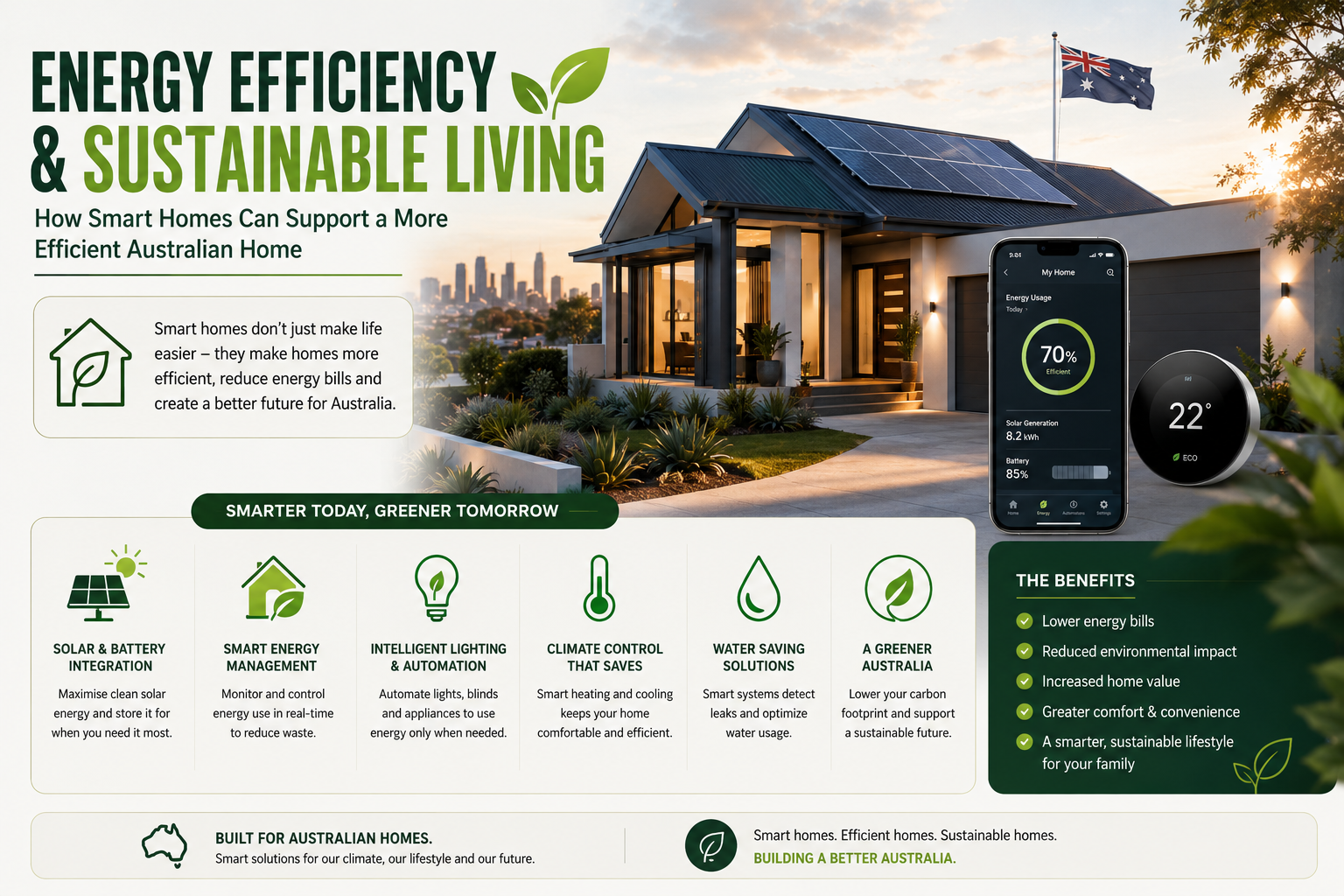
Energy Efficiency and Sustainable Living: How Smart Homes Can Support a More Efficient Australian Home.
Energy Efficiency and Sustainable Living: Energy efficiency and sustainable living are becoming increasingly important for Australian homeowners. Rising energy awareness, changing household needs, solar adoption, electric vehicles and improvements in home technology are encouraging people to think differently about how their homes consume and manage energy.
A modern smart home can play an important role in this transition.
Energy Efficiency and Sustainable Living: Smart home technology cannot eliminate energy consumption, and automation does not automatically make a property sustainable. However, when technology is properly designed and integrated with the home’s electrical, lighting, climate and energy systems, it can help homeowners understand usage, reduce unnecessary consumption and make more informed decisions.
For homeowners building or renovating in Sydney and across Australia, the greatest opportunity often comes from planning energy efficiency before construction is complete.
At Alpha Smart Homes, our approach focuses on creating connected homes where automation, energy management, comfort and future-ready technology work together. The objective is to make sustainable living more practical without making everyday life more complicated.
What Is Energy-Efficient Smart Home Living?
Energy Efficiency and Sustainable Living: Energy-efficient smart home living means using technology, building design and household habits together to manage energy more intelligently.
A smart home may monitor or control systems such as:
- Lighting
- Heating and cooling
- Solar generation
- Battery storage
- Major electrical loads
- Appliances
- EV charging
- Automated blinds
- Hot water systems
- Home energy consumption
The objective is not simply to automate everything.
Instead, smart technology can help homeowners answer important questions:
Where is my energy going?
When does my home use the most electricity?
How much solar energy am I generating?
Can I reduce unnecessary consumption?
Can automation make energy-efficient behavior easier?
Energy Efficiency and Sustainable Living: These insights can help transform energy management from something homeowners rarely think about into a more visible part of everyday life.
Why Energy Efficiency and Sustainable Living Smart Homes Matter in Australia
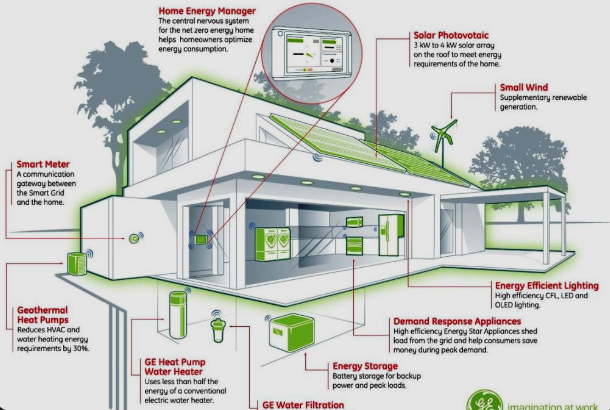
Energy Efficiency and Sustainable Living: Australia has unique energy and climate considerations.
Homes may experience hot summers, varying winter conditions and significant differences in climate between regions. Sydney homeowners may rely heavily on cooling during warmer months, while household energy requirements can also increase through heating, hot water, appliances and entertainment.
At the same time, Australian homeowners are increasingly interested in:
- Solar power
- Battery storage
- Electric vehicles
- Energy monitoring
- Efficient appliances
- Sustainable building materials
- Passive design
- Smart home automation
Energy Efficiency and Sustainable Living: These technologies work best when considered as part of a complete strategy.
For example, installing solar panels without understanding household energy consumption provides only part of the picture.
Similarly, installing smart lighting without considering how lighting is used throughout the home may provide convenience without achieving meaningful efficiency improvements.
A holistic approach is more effective.
The Role of Smart Technology in Energy Efficiency
Energy Efficiency and Sustainable Living: Smart technology can help homeowners make energy decisions based on real information rather than assumptions.
A connected system may allow homeowners to monitor energy consumption and identify patterns.
For example, you may discover that energy usage increases significantly:
- During evening hours
- When air conditioning is operating
- When an EV is charging
- When certain appliances are running
- During periods of low solar generation
Energy Efficiency and Sustainable Living: Once these patterns are visible, homeowners can decide whether automation or behavioral changes could help.
This is where smart technology can provide value.
It does not simply use technology to consume less energy. It provides information and control that can support more efficient behavior.
Pillar 1: Smart Lighting for Lower Energy Consumption
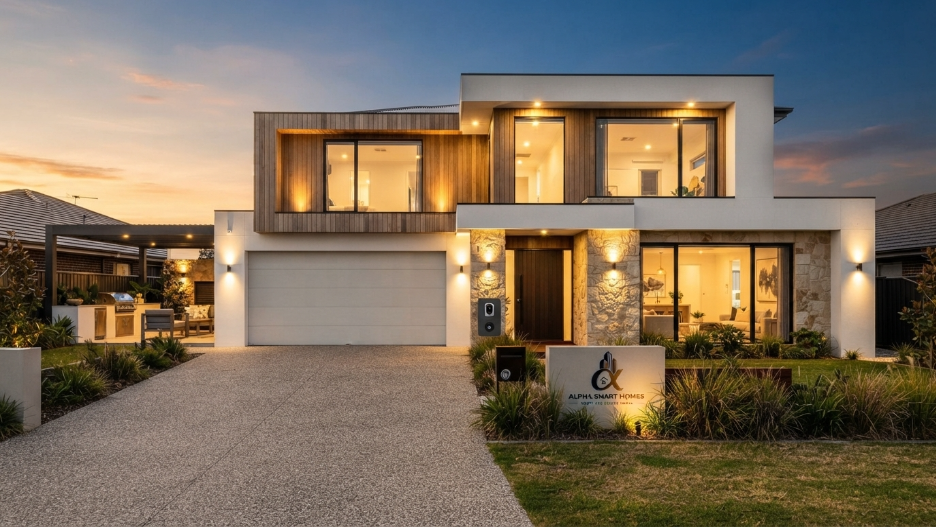
Energy Efficiency and Sustainable Living: Lighting is one of the simplest areas where smart home technology can support efficient living.
Modern LED lighting already provides significant efficiency advantages compared with older lighting technologies.
Smart controls can take this further by helping homeowners use lights only when required.
Automated Lighting
Potential automation strategies include:
- Scheduling lights
- Occupancy-based lighting
- Daylight-responsive control
- Scene-based lighting
- Automatic switch-off
- Reduced brightness at night
For example, hallway lighting does not necessarily need to operate at full brightness throughout the night.
Energy Efficiency and Sustainable Living: A smart lighting system could use lower-intensity lighting for appropriate night-time situations.
Similarly, lights in rooms that are regularly left unoccupied can be switched off automatically where suitable.
Smart Lighting Scenes
Lighting scenes can also support energy-conscious behavior.
A “Goodnight” scene could turn off selected lights throughout the property.
An “Away” scene could switch off appropriate lighting when the household leaves.
The more convenient efficient behavior becomes, the easier it is for homeowners to maintain it consistently.
Pillar 2: Smart Climate Control
Energy Efficiency and Sustainable Living: Heating and cooling can represent a significant portion of household energy use.
Smart climate control can help homeowners manage temperature settings according to actual household requirements.
Instead of maintaining the same settings throughout the day, automation can respond to:
- Time
- Occupancy
- Room zones
- Household routines
- User preferences
For example, a home office can follow a different schedule from a guest bedroom.
Living areas can be prioritized when the family is home.
Unused rooms can potentially operate differently when they are not occupied.
Energy Efficiency and Sustainable Living: The exact strategy depends on the home’s HVAC system and how it is designed.
Zoning for Better Comfort and Efficiency
Energy Efficiency and Sustainable Living: Large Australian homes can contain several different living zones.
Trying to maintain the same temperature throughout the entire property may not always be necessary.
Smart zoning can allow different areas to be controlled according to usage.
For example:
Morning: Kitchen and living areas receive priority.
Working hours: Home office becomes the main occupied zone.
Evening: Living and dining areas become the focus.
Night: Bedrooms receive priority.
Energy Efficiency and Sustainable Living: This approach can help align energy use with actual occupancy.
Pillar 3: Solar Energy Integration
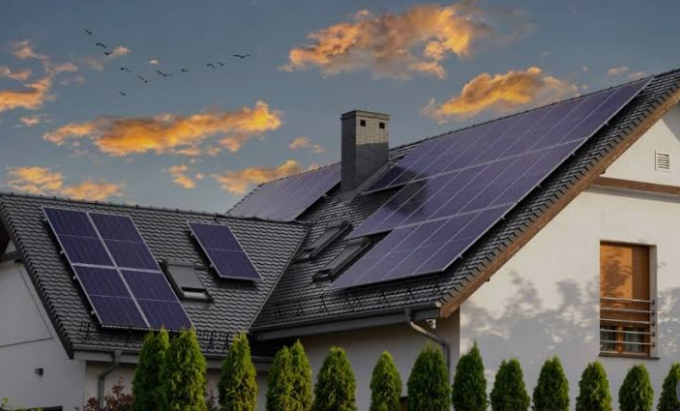
Energy Efficiency and Sustainable Living: Solar power is a major part of Australia’s renewable energy landscape.
Energy Efficiency and Sustainable Living: A smart home can provide greater visibility over solar generation and household consumption.
Depending on the system, homeowners may be able to monitor:
- Solar generation
- Household demand
- Battery storage
- Grid consumption
- Energy trends
Energy Efficiency and Sustainable Living: This information can help homeowners understand how effectively the home is using its available energy.
Making Better Use of Solar Generation
Energy Efficiency and Sustainable Living: For homeowners with solar systems, energy management can become particularly useful.
If solar generation is strongest during the day, some household activities may be scheduled around that period where practical.
Potential examples include:
- EV charging
- Suitable appliances
- Hot water heating
- Other controllable electrical loads
Energy Efficiency and Sustainable Living: The exact approach depends on the home’s energy system and the equipment installed.
Pillar 4: Battery Storage and Smart Energy Management
Energy Efficiency and Sustainable Living: Battery storage can allow homeowners to store generated energy for later use.
When combined with monitoring and appropriate automation, homeowners may gain greater visibility into how energy moves through the property.
A smart energy environment can potentially show:
- How much energy solar is producing
- How much the household is consuming
- How much energy is stored
- When the battery is charging
- When energy is being drawn from storage
- When the home is using grid electricity
Energy Efficiency and Sustainable Living: This information can make household energy management more transparent.
Pillar 5: EV Charging and Sustainable Transport
Energy Efficiency and Sustainable Living: Electric vehicles are becoming an increasingly important consideration for Australian households.
For new homes, EV charging can be considered during the electrical planning stage.
An energy-conscious smart home may connect EV charging with the broader energy strategy.
For example, where technically appropriate, charging can potentially be scheduled around:
- Solar generation
- Electricity tariffs
- Household demand
- Battery availability
- Vehicle requirements
Energy Efficiency and Sustainable Living: The objective is not simply to install an EV charger.
It is to consider how vehicle charging fits into the home’s overall energy ecosystem.
Pillar 6: Smart Appliances and Energy Monitoring
Energy Efficiency and Sustainable Living: Connected appliances can provide homeowners with more information and control.
Depending on the appliance, homeowners may be able to monitor:
- Operating schedules
- Energy consumption
- Usage patterns
- Maintenance requirements
However, not every appliance needs to be connected.
Energy Efficiency and Sustainable Living: The value comes from identifying where monitoring or automation can provide genuine benefits.
A good smart home design should avoid adding technology simply because it is available.
Pillar 7: Automated Blinds and Passive Energy Management
Energy Efficiency and Sustainable Living: Technology can support passive strategies as well.
Automated blinds can potentially be scheduled to respond to time, sunlight conditions or household routines.
During hot periods, appropriate shading can help reduce unwanted solar heat entering certain spaces.
During cooler periods, opening blinds at suitable times may allow natural sunlight to contribute to indoor comfort.
The effectiveness depends on the home’s orientation, window design, glazing, insulation, shading and climate.
Smart blinds should therefore complement good architectural and passive design rather than replace it.
Pillar 8: Energy Monitoring
Energy Efficiency and Sustainable Living: Energy monitoring is one of the most useful components of a sustainable smart home.
Without measurement, it can be difficult to understand where energy is being used.
A monitoring system may provide information about:
- Current consumption
- Daily usage
- Historical usage
- Solar generation
- Battery status
- Major loads
- EV charging
Energy Efficiency and Sustainable Living: This can help homeowners identify unusual or unnecessary consumption.
For example, if energy usage remains high when nobody is home, the data may encourage the homeowner to investigate what is consuming electricity.
Pillar 9: Smart Scheduling
Energy Efficiency and Sustainable Living: Scheduling is a simple but effective automation strategy.
Some systems do not need to operate continuously.
Homeowners can potentially schedule appropriate equipment around household routines.
Examples include:
- Lighting schedules
- Climate schedules
- EV charging schedules
- Hot water schedules
- Pool equipment schedules
- Garden irrigation schedules
Energy Efficiency and Sustainable Living: Scheduling should always account for household requirements and manufacturer recommendations.
The objective is to avoid unnecessary operation while maintaining comfort and convenience.
Pillar 10: Occupancy-Based Automation
Energy Efficiency and Sustainable Living: Sensors can help determine whether an area is occupied.
Depending on the system, occupancy information may be used to influence:
- Lighting
- Climate
- Security
- Automation scenes
For example, lights may switch off after an area has remained unoccupied for an appropriate period.
Energy Efficiency and Sustainable Living: Similarly, climate settings may respond to occupancy patterns where supported.
These strategies can help align energy use with actual household activity.
Designing a Sustainable Smart Home From the Beginning
Energy Efficiency and Sustainable Living: Energy efficiency should ideally be considered before construction begins.
A new home provides opportunities to coordinate:
- Orientation
- Insulation
- Glazing
- Shading
- Lighting
- Electrical systems
- Solar
- Battery storage
- Network infrastructure
- Smart controls
- EV charging
Energy Efficiency and Sustainable Living: Smart technology works best when it complements the home’s physical design.
Passive Design Comes First
Energy Efficiency and Sustainable Living: Automation should not be used to compensate for poor building design.
Good insulation, appropriate glazing, shading, ventilation and orientation can all contribute to energy efficiency.
Smart technology can then provide additional control and visibility.
This creates a more balanced approach to sustainable home design.
Smart Home Pre-Wiring for Sustainable Technology
Energy Efficiency and Sustainable Living: Pre-wiring is not only useful for security and entertainment.
It can also support future energy and automation technologies.
During construction, homeowners can consider infrastructure for:
- Energy monitoring
- EV charging
- Smart control systems
- Solar-related equipment
- Battery systems
- Network connectivity
- Future sensors
Energy Efficiency and Sustainable Living: Installing suitable infrastructure while construction is underway can make future upgrades easier.
This is particularly valuable because technology will continue to change.
Sustainable Living Without Sacrificing Comfort
Energy Efficiency and Sustainable Living: Some homeowners assume energy efficiency requires major lifestyle compromises.
Smart technology can help challenge that idea.
The objective is not necessarily to turn everything off.
Instead, it is about using energy more intelligently.
For example, homeowners may want:
- Comfortable temperatures
- Good lighting
- Entertainment
- Reliable connectivity
- Convenient EV charging
Energy Efficiency and Sustainable Living: Smart automation can help coordinate these requirements with energy-conscious behaviour.
A well-designed system aims for comfort and efficiency, rather than forcing homeowners to choose between them.
Smart Homes and Water Management
Energy Efficiency and Sustainable Living: Although smart home discussions often focus on electricity, sustainable living can also involve water management.
Depending on the property, technology can support:
- Irrigation scheduling
- Rainwater monitoring
- Leak detection
- Garden watering
- Pool management
Energy Efficiency and Sustainable Living: Smart irrigation systems can potentially adjust watering schedules according to weather conditions or soil requirements.
Leak detection can also help homeowners identify potential water issues earlier.
These systems should be selected based on the property’s requirements and installed appropriately.
Smart Homes and Sustainable Outdoor Living
Energy Efficiency and Sustainable Living: Outdoor spaces can consume energy through lighting, pool systems, irrigation and entertainment.
A sustainable smart home strategy should therefore consider the entire property.
For example:
Outdoor Lighting
Energy Efficiency and Sustainable Living: Use scheduling or appropriate automation to prevent unnecessary operation.
Pool Equipment
Where compatible, scheduling can help ensure equipment operates according to required cycles.
Irrigation
Smart irrigation can help avoid unnecessary watering.
Outdoor Entertainment
Power and lighting can be controlled according to actual use.
The goal is to extend efficient home management beyond the interior.
The Importance of a Reliable Smart Home Network
Energy Efficiency and Sustainable Living: Energy management systems themselves depend on reliable connectivity.
A poor network can affect the visibility and control of connected devices.
This makes network infrastructure an important part of sustainable smart home planning.
For larger homes, homeowners may consider:
- Structured cabling
- Multiple access points
- Central network equipment
- Appropriate equipment locations
- Reliable wired connections
A robust network provides a foundation for current and future smart technology.
Why Professional Integration Matters
Energy Efficiency and Sustainable Living: A sustainable smart home involves many different systems.
Solar, battery storage, EV charging, lighting, HVAC, security and networking may all operate independently unless properly coordinated.
Professional planning can help homeowners understand how these systems fit together.
For example, an EV charger should not be treated as an isolated device if the homeowner also has solar, battery storage and energy monitoring.
Similarly, smart lighting should be considered alongside electrical design and household routines.
Integration creates a more coherent solution.
How Alpha Smart Homes Supports Sustainable Living
Energy Efficiency and Sustainable Living: At Alpha Smart Homes, the focus is on creating practical technology solutions designed around the homeowner and the property.
A sustainable smart home strategy may involve:
- Understanding household energy requirements
- Reviewing architectural plans
- Identifying energy-management opportunities
- Planning network infrastructure
- Considering solar and battery integration
- Planning EV charging provisions
- Designing smart lighting
- Considering climate automation
- Establishing appropriate monitoring
- Planning for future upgrades
The objective is not to install every available smart technology.
It is to identify the technologies that provide meaningful value.
A Practical Sustainable Smart Home Strategy
Homeowners can approach sustainable smart home planning in stages.
Stage 1: Improve the Building
Consider:
- Insulation
- Glazing
- Shading
- Orientation
- Ventilation
- Passive design
Stage 2: Improve Energy Generation
Consider:
- Solar
- Battery storage
- Energy monitoring
Stage 3: Improve Energy Control
Consider:
- Smart lighting
- Climate automation
- Scheduling
- Occupancy sensors
Stage 4: Prepare for Future Transport
Consider:
- EV charging
- Garage infrastructure
- Energy integration
Stage 5: Add Intelligent Monitoring
Track:
- Household consumption
- Solar generation
- Battery usage
- Major loads
This staged approach allows homeowners to create a sustainable home without trying to implement everything at once.
Common Energy-Efficiency Smart Home Mistakes
1. Assuming Smart Means Sustainable
A connected device is not automatically energy efficient.
The technology needs to serve a genuine purpose.
2. Ignoring Passive Design
Smart technology should complement good building design.
3. Installing Solar Without Monitoring
Generation is only one part of energy management.
Understanding consumption is equally important.
4. Forgetting EV Charging
New-home electrical planning should consider future transport requirements.
5. Over-Automating
Automation should simplify energy management rather than create unnecessary complexity.
6. Ignoring the Network
Connected energy systems depend on reliable communication.
7. Waiting Until Construction Is Finished
Infrastructure is easier to install when walls and ceilings are accessible.
How Much Does a Sustainable Smart Home Cost?
Energy Efficiency and Sustainable Living: There is no standard price for an energy-efficient smart home.
Costs depend on:
- Property size
- Solar system
- Battery capacity
- HVAC system
- Lighting requirements
- Network infrastructure
- Energy monitoring
- EV charging
- Automation level
- Product selection
- Installation requirements
Energy Efficiency and Sustainable Living: Homeowners should consider the project as a long-term investment rather than focusing only on the initial technology cost.
A staged approach can make sustainable technology more accessible.
For example, homeowners might establish infrastructure and monitoring first, then add additional automation as their budget and requirements evolve.
Frequently Asked Questions
Can smart home technology reduce energy consumption?
Energy Efficiency and Sustainable Living: Smart technology can help reduce unnecessary energy use by providing monitoring, scheduling and automation. However, actual energy savings depend on the home’s design, equipment, settings and household behavior.
Is solar enough to make a home sustainable?
Solar can be an important part of a sustainable energy strategy, but it is only one component. Building efficiency, energy consumption, battery storage, appliances, climate control and household behavior also matter.
Should I install an EV charger in a new home?
If you are building a new home, considering EV charging provisions early can provide flexibility for future vehicle changes.
Can smart blinds improve energy efficiency?
Automated blinds can potentially help manage solar heat and daylight when integrated appropriately with the home’s design. Their effectiveness depends on window orientation, glazing, shading and climate.
Is energy monitoring worth installing?
Energy Efficiency and Sustainable Living: Energy monitoring can provide useful visibility into household consumption and generation. This information can help homeowners understand usage patterns and make more informed decisions.
Can an existing home become more energy efficient with smart technology?
Yes. Existing homes can benefit from smart lighting, climate controls, energy monitoring, solar integration and other technologies. The appropriate approach depends on the property’s existing infrastructure.
The Future of Sustainable Smart Homes in Australia
Energy Efficiency and Sustainable Living: The relationship between smart home technology and sustainable living is likely to become increasingly important.
Future homes may involve closer integration between:
- Solar generation
- Battery storage
- EV charging
- Household appliances
- Climate systems
- Energy monitoring
- Smart lighting
- Home automation
Energy Efficiency and Sustainable Living: Instead of thinking about each system separately, homeowners may increasingly manage the property as one connected energy environment.
This makes early infrastructure planning more valuable.
A home built today should ideally be prepared to adapt to tomorrow’s technologies.
Build a More Efficient Home With Alpha Smart Homes
Energy Efficiency and Sustainable Living: Energy efficiency is not about making a home less comfortable.
It is about making the home more intelligent about how it uses resources.
Smart lighting can help reduce unnecessary operation.
Climate automation can align comfort with occupancy.
Energy monitoring can provide visibility into consumption.
Solar and battery systems can support renewable energy use.
EV charging can be integrated into the home’s energy strategy.
Automated blinds can complement passive design.
Network infrastructure can connect everything reliably.
When these elements are planned together, technology becomes more than a collection of devices. It becomes part of a broader strategy for sustainable living.
For Australian homeowners building or renovating in Sydney, the best time to think about energy efficiency and smart home technology is early in the design process.
At Alpha Smart Homes, the goal is to create practical, connected and future-ready homes where technology supports comfort, efficiency and everyday life.
A sustainable smart home does not need to be complicated.
It needs to be well planned, properly integrated and designed around the people who live there.
Start with the building.
Plan the infrastructure.
Understand your energy.
Automate where it makes sense.
Prepare for future technologies.
And create a home that is ready not only for today’s lifestyle, but for the way Australians will live tomorrow.